Trending Topic

Announcement:

   24/7 Updated News. Trending Topic ID
Showing posts with label Technology. Show all posts

12/8/17

NVIDIA Announces “NVIDIA Titan V" Video Card: GV100 for $3000, On Sale Now

2:36 AM
NVIDIA Titan V
Out of nowhere, NVIDIA has revealed the NVIDIA Titan V today at the 2017 Neural Information Processing Systems conference, with CEO Jen-Hsun Huang flashing out the card on stage. A mere 7 months after Volta was announced with the Tesla V100 accelerator and the GV100 GPU inside it, NVIDIA continues its breakneck pace by releasing the GV100-powered Titan V, available for sale today. Aimed at a decidedly more compute-oriented market than ever before, the 815 mm2 behemoth die that is GV100 is now available to the broader public.
NVIDIA Compute Accelerator Specification Comparison
Titan VTesla V100
(PCIe)
Tesla P100
(PCIe)
Titan Xp
CUDA Cores5120512035843840
Tensor Cores640640N/AN/A
Core Clock1200MHz??1485MHz
Boost Clock1455MHz1370MHz1300MHz1582MHz
Memory Clock1.7Gbps HBM21.75Gbps HBM21.4Gbps HBM211.4Gbps GDDR5X
Memory Bus Width3072-bit4096-bit4096-bit384-bit
Memory Bandwidth653GB/sec900GB/sec720GB/sec547GB/sec
VRAM12GB16GB16GB12GB
L2 Cache4.5MB6MB4MB3MB
Single Precision13.8 TFLOPS14 TFLOPS9.3 TFLOPS12.1 TFLOPS
Double Precision6.9 TFLOPS
(1/2 rate)
7 TFLOPS
(1/2 rate)
4.7 TFLOPS
(1/2 rate)
0.38 TFLOPS
(1/32 rate)
Tensor Performance
(Deep Learning)
110 TFLOPS112 TFLOPSN/AN/A
GPUGV100
(815mm2)
GV100
(815mm2)
GP100
(610mm2)
GP102
(471mm2)
Transistor Count21.1B21.1B15.3B12B
TDP250W250W250W250W
Form FactorPCIePCIePCIePCIe
CoolingActivePassivePassiveActive
Manufacturing ProcessTSMC 12nm FFNTSMC 12nm FFNTSMC 16nm FinFETTSMC 16nm FinFET
ArchitectureVoltaVoltaPascalPascal
Launch Date12/07/2017Q3'17Q4'1604/07/2017
Price$2999~$10000~$6000$1299
For the spec sheet we've gone ahead and lined it up against NVIDA's other Pascal cards, and for good reason. While the Titan series of cards may have started life as a prosumer card in 2013, since then NVIDIA's GPU designs have become increasingly divergent between compute and graphics. And even though the previous Titan Xp was based on the more graphics-focused GP102 GPU, the card itself was primarily (but not solely) pitched as an entry-level compute card, for customers who needed a (relatively) cheap way to do FP32 compute and neural network inferencing in workstations and small clusters.
The Titan V, by extension, sees the Titan lineup finally switch loyalties and start using NVIDIA’s high-end compute-focused GPUs, in this case the Volta architecture based V100. The end result is that rather than being NVIDIA’s top prosumer card, the Titan V is decidedly more focused on compute, particularly due to the combination of the price tag and the unique feature set that comes from using the GV100 GPU. Which isn’t to say that you can’t do graphics on the card – this is still very much a video card, outputs and all – but NVIDIA is first and foremost promoting it as a workstation-level AI compute card, and by extension focusing on the GV100 GPU’s unique tensor cores and the massive neural networking performance advantages they offer over earlier NVIDIA cards.
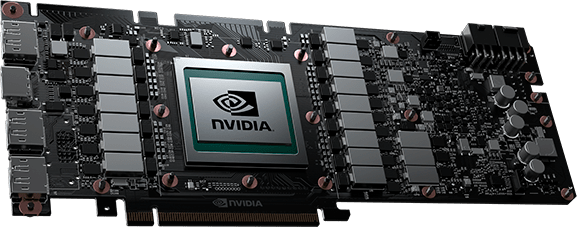
In this sense the Titan V is a return to form of sorts to the professional side of prosumer for the Titan family. One of the original claims to fame for the original Titan was its high performance in specialized FP64 compute workloads, something that was lost on the later Titan X and Titan Xp.  By switching to NVIDIA’s specialized high-end compute GPUs, the Titan V regains its formerly lost compute capabilities, all the while also gaining all of the compute capabilities NVIDIA has introduced since then. It’s no mistake that Jen-Hsun introduced the card at a neural networking conference, as this is a big chunk of the professional computing audience that NVIDIA is targeting with the card.
Interestingly, comparing it to the PCIe Tesla V100, I’m surprised by just how close the cards are in features and performance. NVIDIA has confirmed that the Titan V gets the GV100 GPU’s full, unrestricted FP64 compute and tensor core performance. To the best of our knowledge (and from what NVIDIA will comment on) it doesn’t appear that they’ve artificially disabled any of the GPU’s core features. What does separate the Titan from the Tesla then from a performance standpoint is quite simple: memory capacity, memory bandwidth, and the lack of NVLink functionality. There are also a number of smaller differences between the cards that help to differentiate them between server and workstation – such as passive versus active cooling, NVLink, and the support policies – but otherwise for customers who are running a small number of cards, the Titan V’s feature set is remarkably close to the much more expensive Tesla V100’s, which is a very interesting development since it goes to show just how confident NVIDIA is that this won’t undermine Tesla sales.
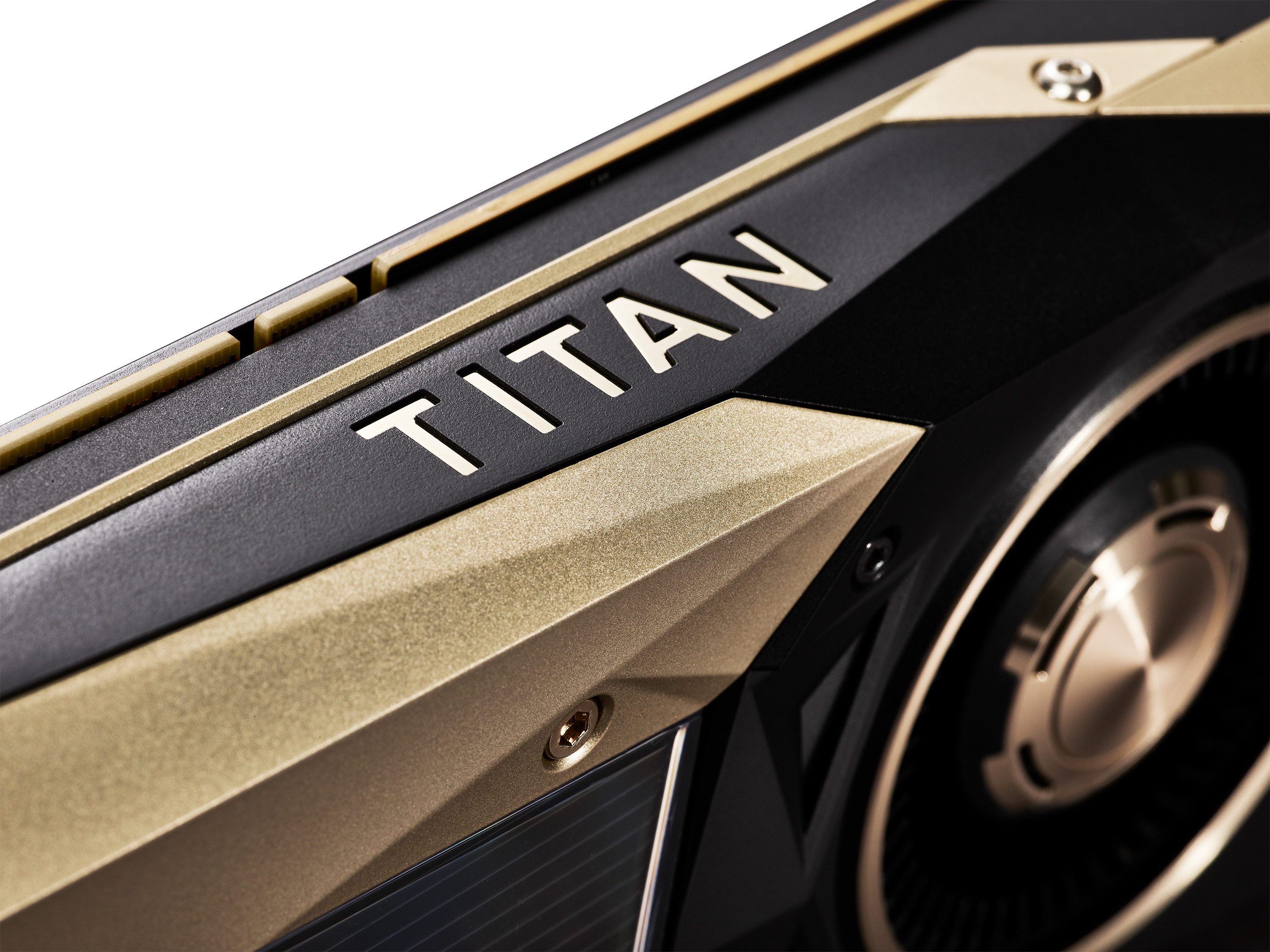
Moving on and diving into the numbers, Titan V features 80 streaming multiprocessors (SMs) and 5120 CUDA cores, the same amount as its Tesla V100 siblings. The differences come with the memory and ROPs. In what's clearly a salvage part for NVIDIA, one of the card's 4 memory partitions has been cut, leaving Titan V with 12GB of HBM2 attached via a 3072-bit memory bus. As each memory controller is associated with a ROP partition and 768 KB of L2 cache, this in turn brings L2 down to 4.5 MB, as well as cutting down the ROP count.
In terms of clockspeeds, the HBM2 has been downclocked slightly to 1.7GHz, while the 1455MHz boost clock actually matches the 300W SXM2 variant of the Tesla V100, though that accelerator is passively cooled. Notably, the number of tensor cores have not been touched, though the official 110 DL TFLOPS rating is lower than the 1370MHz PCIe Tesla V100, as it would appear that NVIDIA is using a clockspeed lower than their boost clock in these calculations.
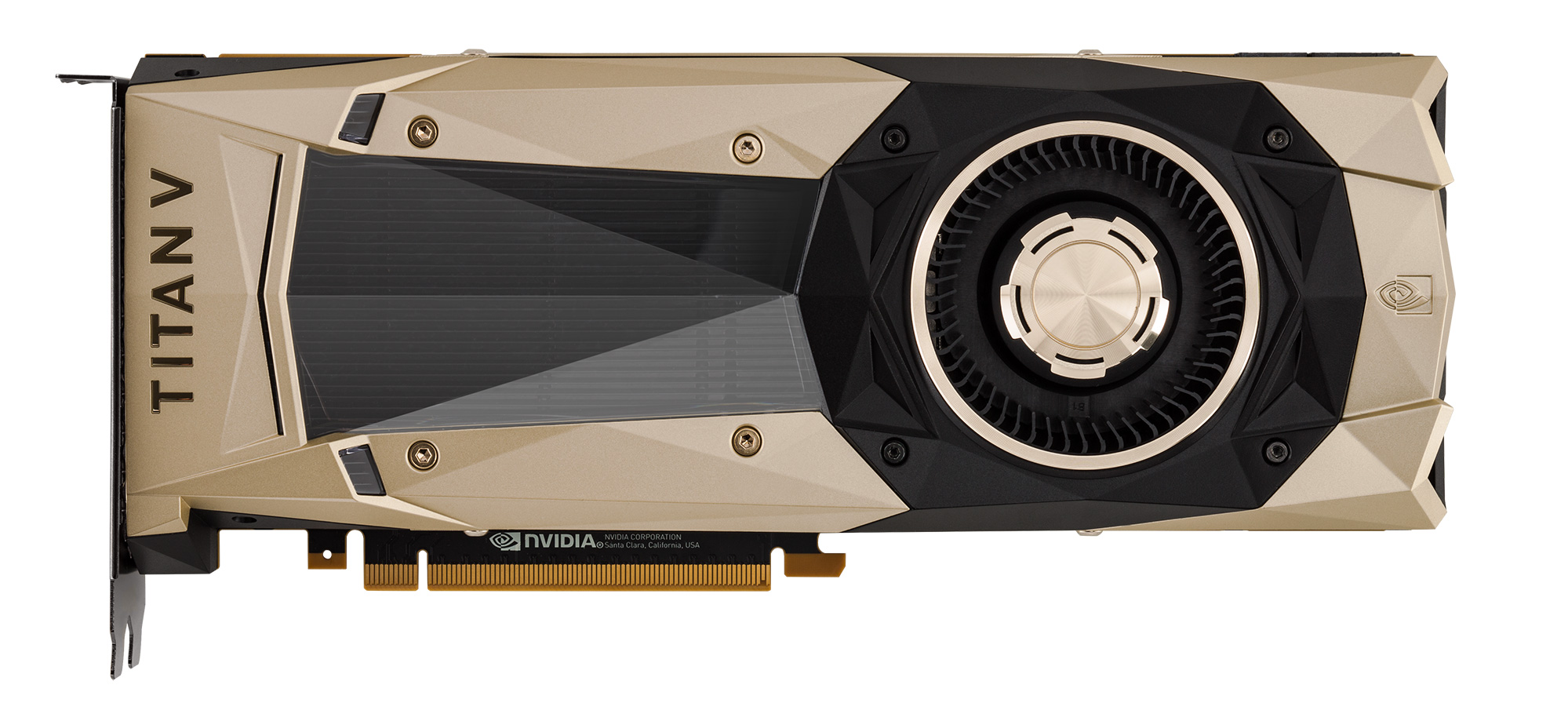
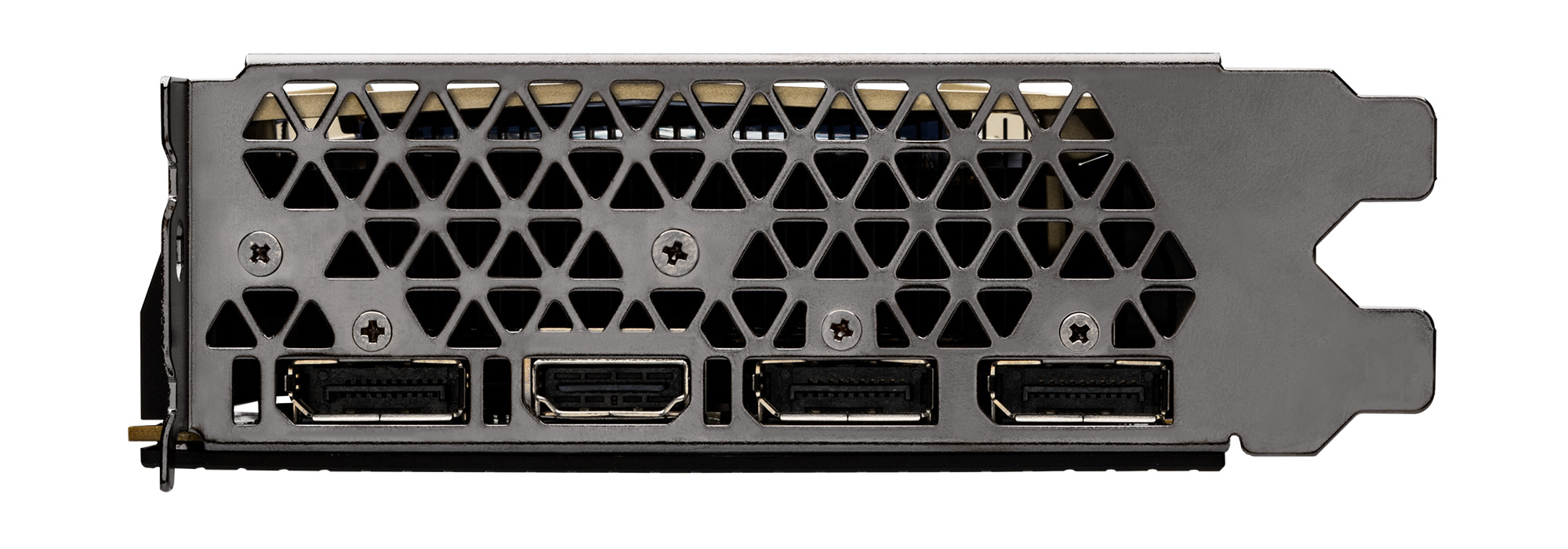
For the card itself, it features a vapor chamber cooler with copper heatsink and 16 power phases, all for the 250W TDP that has become standard with the single GPU Titan models. Output-wise, the Titan V brings 3 DisplayPorts and 1 HDMI connector. And as for card-to-card communication, PCB itself appears to have NVLink connections on the top of the PCB, but these look to have been intentionally blocked by the shroud to prevent their use and are presumably disabled.
As mentioned earlier, NVIDIA is unsurprisingly pushing this as a compute accelerator card, especially considering that Titan V features tensor cores, and keeping the TITAN branding as opposed to GeForce TITAN. But there are those of us who know better than to assume people won’t drop $3000 to use the latest Titan card for gaming, and while gaming is not the primary (or even secondary) focus of the card, you also won't see NVIDIA denying it. In that sense the Titan V is going to be treated as a jack-of-all-trades card by the company.
To that end, no gaming performance information has been disclosed, but NVIDIA has confirmed that the card uses the standard GeForce driver stack. Now whether those drivers have actually be optimized for the GV100 is another matter entirely; Volta is a new architecture, markedly so at times. Speaklng solely off the cuff here, for graphics workloads the card has more resources than the Titan Xp in almost every meaningful metric, but it's also a smaller difference on paper than you might think.
As for NVIDIA's intended market of compute and AI users, the Titan V will be supported by NVIDIA GPU Cloud, which includes a number of deep learning frameworks and HPC-related tools.
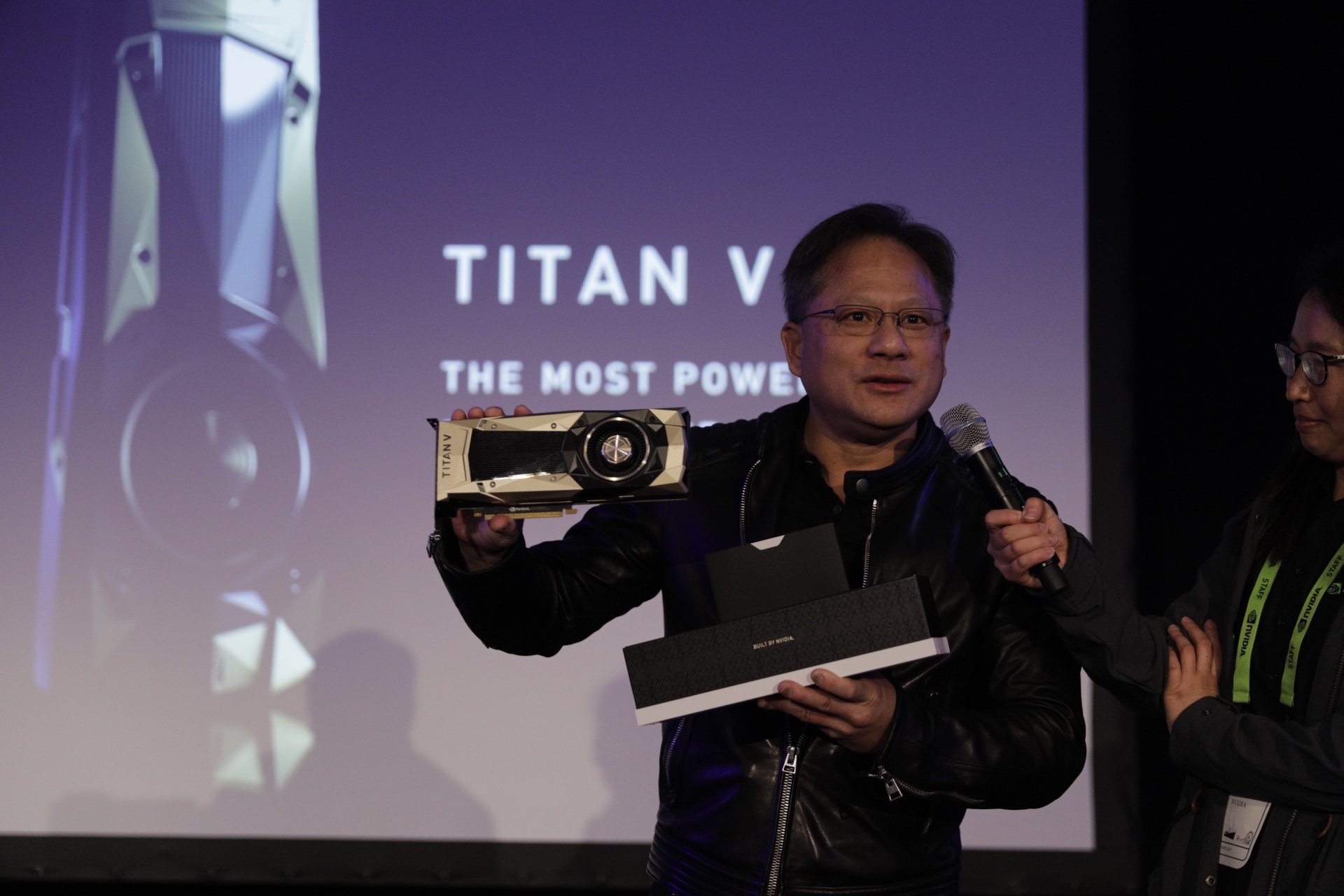
If the golden shroud didn’t already suggest so, the Titan V is also carving out a new eye-watering price point, dropping in at $2999 and on sale now at the NVIDIA store. NVIDIA has, to date, been selling Tesla V100 products as fast as they can produce them, so I'm not going to be surprised if the Titan V sees a similar fate. The $3000 price tag is quite high, even by Titan standards, but with the rare Tesla V100 PCIe card going for around $10,000, the Titan V is markedly cheaper. In fact in some respects I'm surprised NVIDIA is selling a GV100 card for so little; these are GV100 salvage parts that don't make the cut for Tesla - so the alternative would be throwing them away - but it just goes to show how confident NVIDIA is that it won't undermine the Tesla family.
At any rate, for NVIDIA professional users who have been looking to dip their toes into Volta but didn't want a full-fledged Tesla card, the Titan V is clearly going to be a popular card. Over the last two years NVIDIA's AI efforts have been firing on all cylinders, and by bringing a GV100 card down to just $3000, expect to see them crack open the market that much further. I dare say the idea of the "prosumer" Titan has died with this card, but for the rapidly growing professional compute market, this looks to be exactly the kind of card that a lot of developers have been waiting for.
source
Read More ...

12/5/17

Xiaomi Redmi 5 and Redmi 5 Plus to arrive in 4 colors

10:47 AM
Xiaomi will announce the Redmi 5 and the Redmi 5 Plus on December 7, but we already know the color options for the phones. The company spokesperson Donovan Sung posted on Twitter a set of photos, revealing the Redmi 5 will arrive in Black, Pink and Blue while the bigger version will be available in Black and Gold.
Xiaomi Redmi 5 in Black Xiaomi Redmi 5 in Pink Xiaomi Redmi 5 in Blue
Xiaomi Redmi 5 colors
The Xiaomi Redmi 5 phones are advertised as “A phone for a thousand”, meaning it will cost CNY1,000 or around $150/€127. For this price Xiaomi is expected to offer the Redmi 5 with 3 GB RAM and 32 GB storage (but more powerful configurations are also on the way).
Xiaomi Redmi 5 Plus in Black Xiaomi Redmi 5 Plus in Gold
Xiaomi Redmi 5 Plus colors
Other alleged specs include 5.7” FullView display with HD+ resolution on the Redmi 5 and 6” tall screen with FullHD+ resolution for the Plus variant. The OS was already confirmed by Xiaomi to be Android Nougat 7.1.2 with stable MIUI 9 on top.
Read More ...

7/27/15

Life gets tougher for alternative mobile OSes Tizen, Firefox and Ubuntu

8:51 AM

Life gets tougher for alternative mobile OSes Tizen, Firefox and Ubuntu

An increased focus on affordable smartphones running Android
has left smaller operating systems behind

SamSung Tizen-baSed z1
The future doesn’t look very bright right now for alternative mobile operating systems Firefox OS, Tizen and Ubuntu. It’s always been difficult to attract developers to these platforms, and now smartphones powered by the OSes are also falling behind affordable Android devices on hardware specs. So not only must their users put up with a smaller selection of apps, but also with less powerful devices. Struggling to compete with Apple in the high-end of the smartphone market, the Android camp has increasingly turned its attention to mid-range and low-end products. While this has been good for consumers looking for more affordable products, it has turned up the competitive heat on Firefox OS, Tizen and Ubuntu. Case in point: Samsung Electronics’ Tizenbased Z1, which after many delays premiered this year in India, a country with a low smartphone penetration. But others also saw the opportunity, and today competition in India and many other developing countries is even more heated than in Europe and the US. The Z1 has a 1.2GHz dual-core processor and a 4in, 480x800-pixel screen. There is a 3Mp camera on the back and a VGA camera on the front. The price tag in India is now about 5,000 rupees (£51). For the same money, the new Honor Bee from Huawei Technologies has a 1.2GHz quad-core and a 4.5in, 480x854- pixel screen. The main camera has an 8Mp resolution and there is a 2Mp for selfies. The Bee, which runs Android, has twice the storage at 8GB. Consumers willing to spend another £30 on a more advanced model get a bigger HD screen and LTE. Firefox OS smartphones are also struggling to compete. Japanese mobile operator KDDI and LG Electronics have developed the FxO, a Firefox OS-based phone with a 4.7in HD screen and LTE. But it costs Y49,680 (£266), while Android-based smartphones in the same price range in Japan offer bigger full-HD screens, faster processors and more storage. There are signs that at least Firefox OS developer Mozilla Foundation and Ubuntu


developer Canonical are trying to step up hardware efforts. Mozilla is working to ensure future Firefox OS smartphones meet or exceed expectations in terms of performance and reliability, at all price points, CEO Chris Beard said in a recent email to the community. As part of this reboot, Mozilla CTO Andreas Gal, who co-created Firefox OS and wrote the first lines of code, is leaving Mozilla this week. The push to build £25 smartphones hasn’t been as successful as the organization had hoped. The lesson is that Firefox OS phones have to offer something more than just a low price. Meanwhile, Canonical is working with Spanish hardware maker BQ on a highend Ubuntu-based smartphone designed to double as a PC when connected to an external screen and keyboard, according to Cristian Parrino, vice president of Mobile and Online Services at Canonical. It will also be the first Ubuntu device that’s not based on a previously released Android smartphone. “For once we’d like to come out with a device at the same time as it comes out on Android,” Parrino said. For example, BQ launched recently its second device running Canonical’s OS, the €200 (£143) Aquaris E5 HD Ubuntu Edition, whose Android edition started shipping last year. The smartphone has a 5in HD screen, a 13Mp rear camera and a 5Mp front


camera. While the launch is a step in the right direction, the smartphone lacks LTE and features a low-end quad-core 1.3GHz Cortex-A7 processor from MediaTek. One development that would help all the OSes is wider support from smartphone manufacturers, but up and coming vendors such as Xiaomi and India’s Micromax Informatics have showed little interest in the newcomers, preferring Android instead. Xiaomi has its own MIUI user interface and Micromax is collaborating with Cyanogen. The alternative operating systems don’t have enough scale. When even Microsoft is struggling to compete, it’s hard to see how the smaller platforms can make a difference, Micromax chairman Sanjay Kapoor said in an interview earlier this year. To help with growth, Samsung has installed Tizen on smartwatches and TVs. The latter is a product category Mozilla is going after, as well. Panasonic has started rolling out its first Firefox OS Viera TVs. Success won’t come easier in these two sectors, but it could help raise the profile of the two operating systems. Still, with a combined market share of less than 0.4 percent, all three operating systems face an uphill battle, and if they disappear, it would be a loss for consumers, because it would mean less competitive pressure for Apple and Google.
Read More ...

7/22/15

VR war heats up

12:40 PM

VR war heats up

Oculus Rift now has a release date

set for early 2016, and minimum specs

VR war heats up

For the longest time, we’ve had an Oculus Rift headset in the office and we’ve been repeatedly
blown away by the virtual reality prototypes people have created for it. Soon, you’ll be able to try it
for yourself.The Oculus Rift consumer model, which we’ve been waiting for since 2013, will be
released in early 2016—quarter one, in business speak, so any time between January and March. The recent Crescent Bay model we tried really impressed us, but that was before the HTC Vive stole the
show at GDC earlier this year. So the VR race is in an interesting place right now.Oculus certainly sounds like it’s making huge leaps over the earlier model. The new Rift “builds on the presence, immersion,and comfort of the Crescent Bay,”according to a recent announcement, “with an improved tracking system that supports both seated and standing experiences, as well as a highly refined industrial design,and updated ergonomics.”
Also revealed recently were the recommended specs of the PC you’ll need to run this device. For what the company describes as the ‘full Rift experience’, you’ll need an Nvidia GTX 970 or AMD 290 equivalent or greater, as well as 8GB of RAM, an equivalent processor to an i5-4590, an HDMI port and two USB ports. That’s quite a high bar for many consumers to reach, but by early 2016
they’ll be able to match those specs for a little less than it would cost them now. And
those are mid-range graphics cards—in no way is VR outside the spending power of most dedicated PC owners. Obviously this is an important consideration for getting VR into people’s homes.
The next few months of VR development will be crucial. It’s expected that the Valve and HTC Vive headset, which is Oculus’s toughest competitor right now, will releaseby Christmas. Will the first to market be the one to win VR? It’s unlikely to be as straightforward as that. VR is something
that many regular consumers will need to try before they’re going to be sold on the concept and its place in either their videogames or their everyday lives. Seeing really is believing with VR—and
seeing how quickly the tech has advanced has been incredibly exciting. There’s now a timeframe for when you can finally experience this for yourself.
Read More ...

4/25/15

How You Can Make $150K or More as a Food Blogger

6:51 AM

How You Can Make $150K or More as a Food Blogger

Have dreams of making it big as a food blogger? There’s a science to it. Photo: Lumina/Stocksy
 Food blogging as a career is, for some, the stuff of daydreams. Yet more and more, one-time hobbyists are turning their blogs into full-fledged, money-making ventures by attracting the attentions of big-name sponsors. One blogger, who we’ll call Mallory, has done particularly well: Last year, she made more than $150,000. This year, she expects to clear a quarter of a million.

“You’ve got to decide: Is this a personal thing or is this what I want to do to make a living?” Mallory told Yahoo Food. Her blog is a few years old, though she only began making big bucks last year when she signed with an agent, which helped her land deals with major grocery store brands looking to reach a digital audience. 
Most often, she’s paid to write a recipe post using the brand’s product — something that, not long ago, the same brands might have recruited bloggers to do for as little as $50. “I won’t do a post for less than $3,500 now,” Mallory said. “My average is about $5,000, and my high is $10,000.”
“Large brands were not thinking this way a few years ago — it’s a definite shift not only in terms of their spending, but their mindset,” said Raina Penchansky, the chief strategy officer of talent agency Digital Brand Architects. Although she doesn’t represent Mallory, her boutique firm handles about a dozen food-focused bloggers and social media personalities, including former Yahoo Food Bloggers of the Week Claire Thomas of Kitchy Kitchen and Love & Lemons’s Jeanine Donofrio.
“There’ll always be print media, and there’ll always be television,” Penchansky said. “But traditional brands are definitely seeking out opportunities with bloggers, because that’s where the audience is. And you have go where the audience is.”

For Mallory, that audience is in large part her robust social following on Facebook, Instagram, Twitter, and Pinterest: She boasts roughly 300,000 followers combined across all four platforms. There’s no magic formula to gaining a loyal following, she said — it’s simply the result of being active on social media, both by posting frequently and replying to readers. And we mean frequently — Mallory tweets, Facebooks, Instagrams, and pins multiple times throughout the day, Monday through Friday. That’s in addition to posting two to three new blog posts a week, each of which require at least three rounds of recipe testing and numerous staged photographs. It’s a full-time job.

image

Being active on social media is key to growing a loyal readership. Photo: Jovo Jovanovic/Stocksy


Read More ...